Electrolysis:
More Than Hair Removal
A fascinating history from medical innovation to modern permanent hair removal
Did you know that electrolysis wasn’t invented as a beauty treatment?
Its story actually began with an eye condition in the 1800s — and more than 150 years later, electrolysis is once again becoming closely connected with healthcare, wellbeing and gender-affirming care.
Electrolysis has a fascinating history that goes back more than 150 years. Often thought of simply as a cosmetic beauty treatment, its origins were actually medical, and its role today goes far beyond aesthetics. We want to share the fascinating history behind a treatment we perform every day at Buff & Bare.
From a 19th-century medical treatment to modern permanent hair removal
Most people think of electrolysis as a cosmetic treatment, something you choose because you simply don’t want a particular hair anymore.
But the history of electrolysis tells a much more interesting story.
In fact, electrolysis wasn’t originally developed as a beauty treatment at all. Its beginnings were medical, and more than 150 years later, we are seeing electrolysis increasingly recognised for the much broader role it can play in people’s lives.
It started with eyelashes
The story takes us back to the 1800s.
Dr Charles Michel began using electricity to treat ingrown eyelashes, pioneering the technique that became electrolysis.
In 1869, American ophthalmologist Dr Charles Michel began using electricity to treat patients suffering from trichiasis – a condition where eyelashes grow inwards towards the eye.
These incorrectly growing hairs could cause significant discomfort and potentially damage the eye. Dr Michel needed a way of permanently dealing with the problematic hairs rather than simply removing them temporarily.
His solution was remarkably similar in principle to the galvanic electrolysis we still use today.
A fine needle was inserted into the hair follicle and connected to the negative electrode of a battery. The electrical current created a chemical reaction within the follicle, producing sodium hydroxide (lye), which destroyed the tissue responsible for supporting the hair.
The hair could then be removed with tweezers.
And with that, galvanic electrolysis was born.
From medicine to hair removal
Over the decades that followed, electrolysis developed enormously.
Equipment became more sophisticated, treatment methods evolved, hygiene and sterilisation standards improved, and different forms of electrolysis were developed.
Then came another major development in hair removal: laser.
Laser hair removal became enormously popular during the 1990s and changed the industry. But laser and electrolysis don’t actually do exactly the same job.
Laser works by targeting pigment within the hair and is used for long-term hair reduction. This means it can be extremely effective for the right person and the right type of hair, particularly when treating larger areas.
Electrolysis works differently. Each individual follicle is treated, which means it can be used on hair colours that laser cannot effectively target – including white, grey, red and very fair hairs.
They can complement each other beautifully.
This is one of the reasons we don’t see laser and electrolysis as competing treatments at Buff & Bare. They can complement each other beautifully.
For some clients, laser may remove or significantly reduce the majority of the hair, while electrolysis can be used to permanently remove individual remaining hairs.
But sometimes, hair removal isn’t really about hair
This is perhaps the most important part of the story.
Modern electrologists increasingly work with people whose reasons for removing hair go far beyond aesthetics.
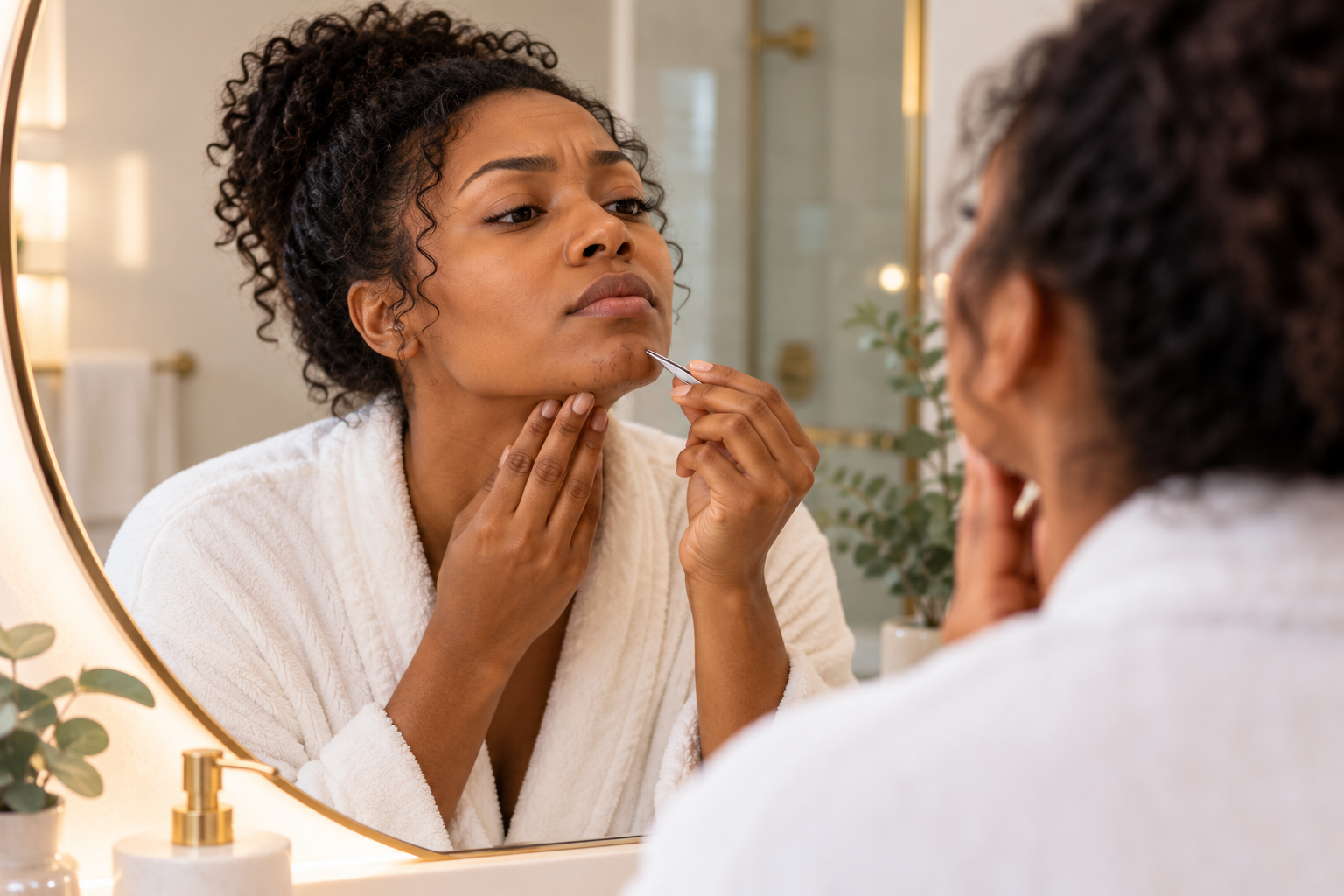
That might be someone experiencing unwanted facial hair associated with hormonal changes. It might be a person who has lived with a few very visible hairs for years and finds themselves constantly checking the mirror or reaching for the tweezers.
For another person, hair removal may form part of their gender-affirming care.
Suddenly, something that can easily be dismissed as “just hair removal” becomes something much more significant.
It can be about comfort, confidence, identity and quality of life.
It can be about comfort, confidence, identity and quality of life.
There is something fascinating about the fact that electrolysis began as a medical solution in the 19th century, spent many decades being thought of predominantly as a cosmetic beauty treatment, and is now increasingly working alongside other areas of health and specialist care.
Technology has changed dramatically since Dr Michel connected his needle to a battery in 1869, and thankfully the experience of having electrolysis has changed considerably too.
One of the most advanced electrolysis systems available, delivering fast, precise and gentle treatment for all hair types, with exceptional post-epilatory care.
At Buff & Bare, we use the Apilus XCell, one of the most advanced electrolysis systems available. For our clients, that technology translates into what really matters: fast, precise treatment with exceptional comfort. Energy can be delivered in just thousandths of a second, allowing us to permanently treat individual hair follicles efficiently while keeping the experience as comfortable as possible.
For us, treatment doesn’t finish when the last hair is removed. We complete our electrolysis sessions with cataphoresis, a soothing post-treatment process designed to calm the skin, reduce redness, and support the skin’s natural healing process. It’s something our clients regularly tell us makes a noticeable difference to how quickly and comfortably their skin settles after treatment.
Treat the individual hair follicle to permanently remove a hair that is causing a problem for that person.
At Buff & Bare, that’s why we believe good hair removal starts with understanding why someone has walked through our door.
For one person, removing a hair might simply be a cosmetic preference.
For somebody else, it can mean something much bigger.
And both reasons are equally valid and Every Body Is Welcome!
Source of inspiration: Beyond Electrolysis Basics
Book an electrolysis consultation with Buff and Bare in St Albans or Hitchin today.
Book Online